The Jawline Architect: Why Your Gua Sha Isn't Working (Yet)
We have all seen the viral videos of women achieving a "snatched" jawline in seconds using a piece of stone. It looks like magic, but if you have tried it at home and seen zero results, you are likely missing the structural "why" behind the movement.
As a practitioner who has guided thousands of women through their natural aging journey, I see the same mistake over and over again. People treat Gua Sha like they are scraping a window. In reality, you are communicating with your fascia and your lymphatic system. If you want a jawline that looks like it was carved out of marble, you have to stop "scraping" and start "sculpting."
It Is Fluid, Not Just Fat
Most of the "heaviness" we see in the lower face as we hit our mid thirties isn't just weight gain or sagging skin. It is stagnant lymph fluid. Because the jawline is the lowest point of the face, it acts like a basin where fluid collects, especially if your neck is tight.
When you use a Gua Sha tool, you are acting as a manual pump for that fluid. But here is the secret: you cannot move fluid through a "clogged pipe." If you don't open the lymph nodes in your neck first, the fluid you move from your jaw has nowhere to go. It just sits there, eventually making the puffiness worse.
The Protocol for a Defined Lower Face
To see a real difference, follow this 3-step architect routine:
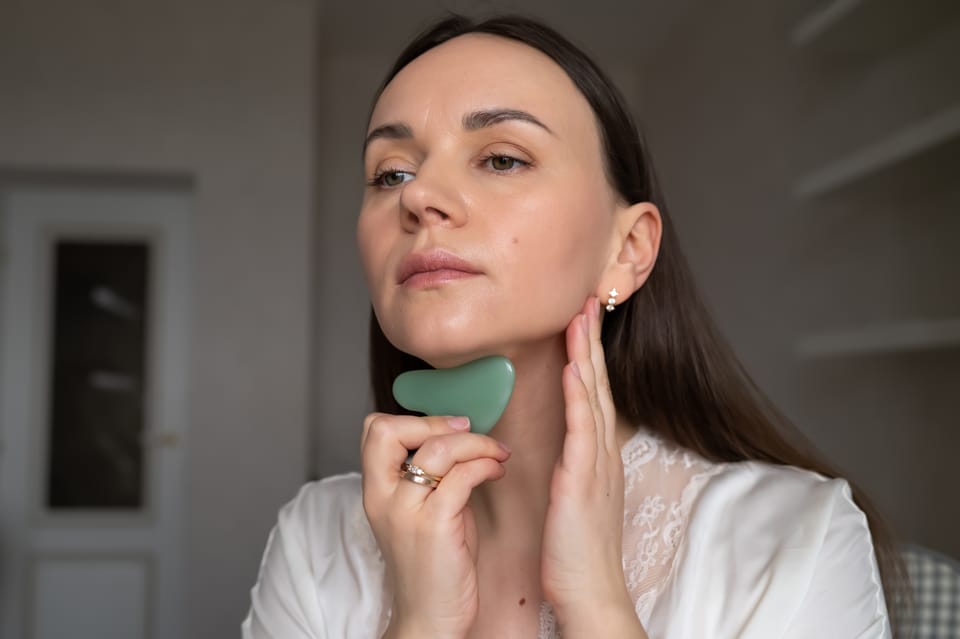
1. Open the Drainage Site Before the stone even touches your face, use the notched side to gently stroke down the side of your neck, from behind the ear to the collarbone. Do this five times on each side. This "clears the path" so the fluid has an exit strategy.
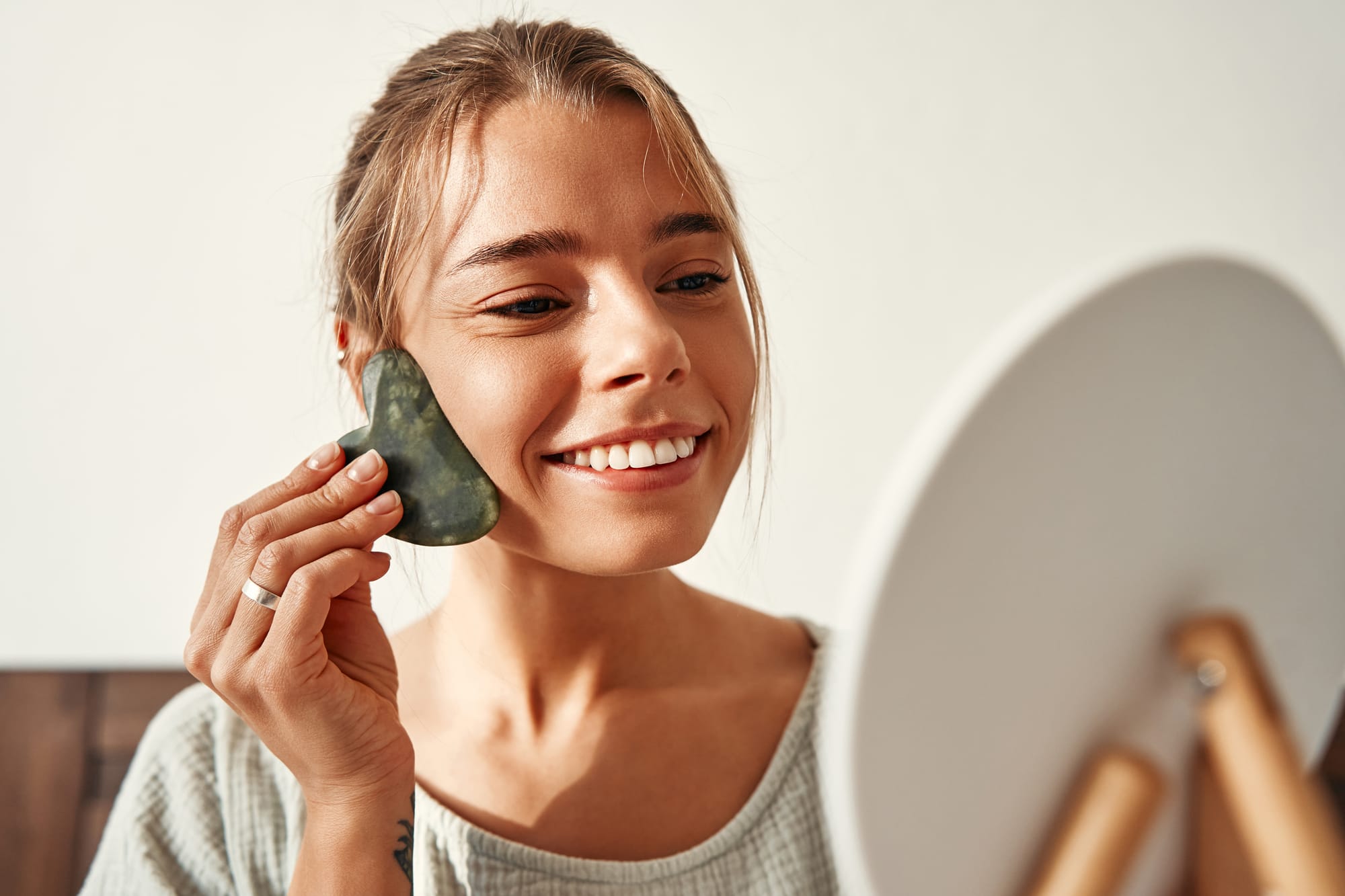
2. The 15-Degree Angle This is the most common technical error. Never hold the stone at a 90-degree angle to your skin. This creates friction and can actually damage the delicate capillaries. You want the stone to be almost flat against your face, at about a 15-degree angle. This allows the stone to "grip" the fascia and move the fluid rather than just rubbing the surface.
3. The Anchor and Glide Place your non-dominant hand on your chin to "anchor" the skin. Take the notched side of your stone and gently glide from the chin, along the jawbone, all the way to the earlobe. When you reach the ear, give it a little "wiggle." This vibration helps the lymph node process the fluid.
The Science of Fascial Remodeling
Why does this work long term? It is about "mechanotransduction." When we apply controlled, gentle pressure to our tissues, our cells respond by reorganizing the collagen fibers. You can read a fascinating clinical study on how mechanical stimulation affects skin fibroblasts to see how your daily 5-minute ritual is actually changing your skin's biology.
Don't Forget the Slip
Never, ever use a Gua Sha on dry skin. You need a high-quality oil that provides enough "slip" so the tool glides effortlessly. I personally prefer a squalane or jojoba base for the jawline because they won't clog your pores but offer a beautiful, long-lasting glide.
Consistency is the only "secret ingredient." Do this for five minutes every evening while you wind down, and within two weeks, you will see a jawline you thought was gone forever.