Stop Looking Angry: The 3-Minute "11" Line Eraser That Actually Works

If you have ever caught your reflection in your laptop screen during a Zoom call and wondered why you look so incredibly frustrated, you are not alone. Those vertical furrows between your brows, often called "the 11 lines," are the most common reason women in their thirties and forties start booking Botox appointments. We call them "stress lines" for a reason. They are the physical manifestation of concentration, squinting, and subconscious tension.
As an expert who has spent years helping women reclaim their faces, I can tell you that "freezing" the muscle is a temporary bandage on a structural habit. If you want to erase those lines for good, you need to address the fascia that has literally "set" into a fold. Here is how we do it without a single needle.
The Psychology of the Frown
The muscles between your brows, the procerus and the corrugator supercilii, are deeply tied to your nervous system. When you are stressed, they contract. Over time, the fascia—the connective tissue wrapping those muscles—becomes tight and dehydrated. It loses its "slide." Once the fascia is stuck, the wrinkle remains even when you are perfectly relaxed. Our goal is to "unstick" the tissue and re-educate the nervous system.
The 3-Step "11" Eraser Ritual
This is a ritual you should perform every night before bed. It takes exactly three minutes and yields results that often surprise even the most skeptical clients.
1. The Horizontal Shear Apply a small amount of oil to your forehead. Take your two index fingers and place them vertically between your brows. Now, move them in opposite directions (one up, one down) in a fast, scrubbing motion. This creates friction and heat, which softens the "gluey" fascia. Do this for thirty seconds until the skin looks slightly pink. This is a sign of fresh blood flow and tissue repair.
2. The Brow Spread Place the heels of your hands on your temples. Gently pull the skin outward to flatten the forehead. While holding this tension, try to "frown" against the resistance of your hands. Hold the frown for five seconds, then release. This is a resistance exercise that tires out the overactive muscles, forcing them to drop into a state of deep relaxation.
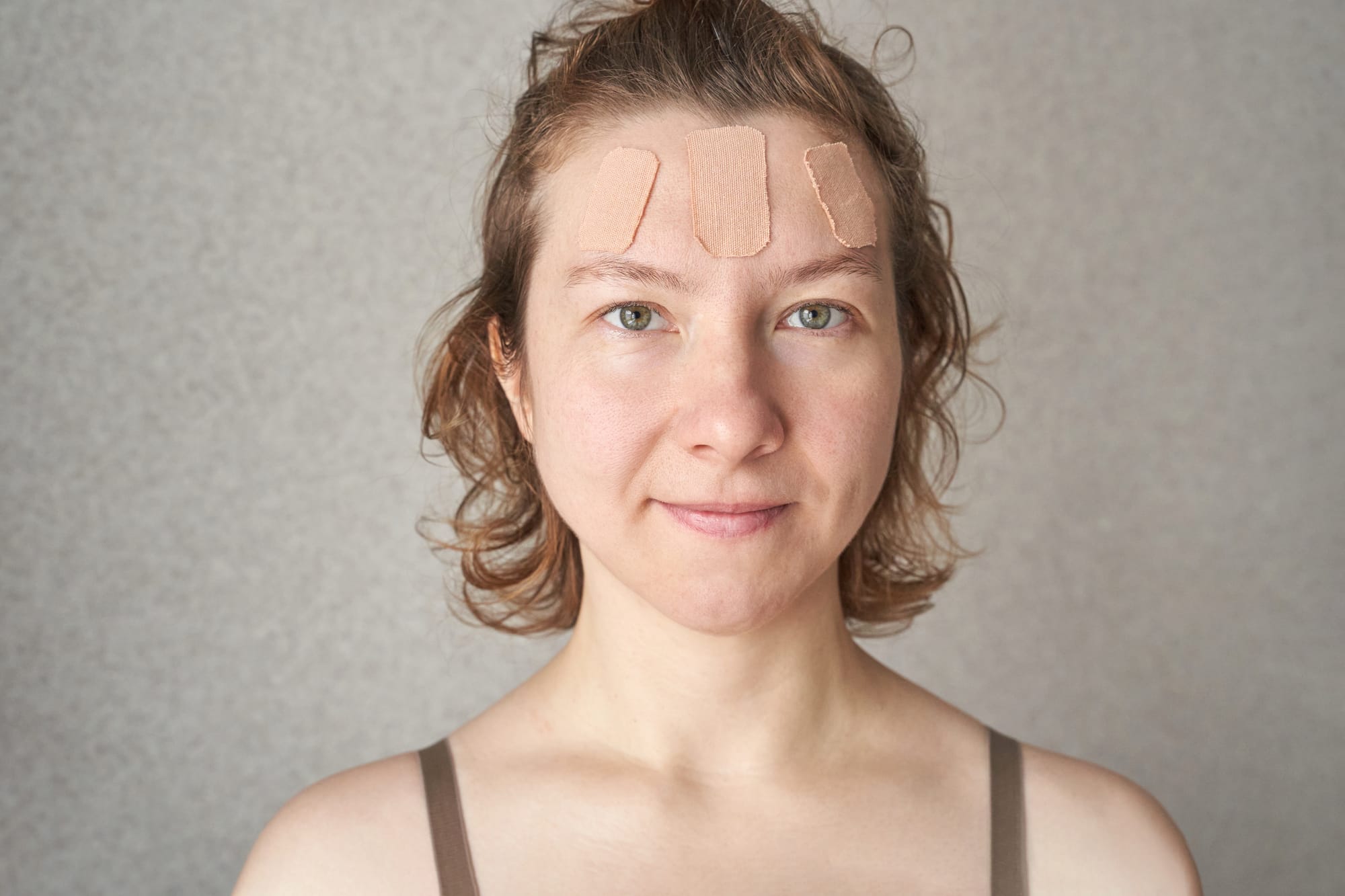
3. The Nighttime "Reminder" This is the most actionable tip I can give you: use face tape. You don’t need expensive brand-name patches. A simple piece of professional medical tape placed horizontally between your brows at night acts as a biofeedback tool. Every time you try to furrow your brow in your sleep, the tape provides a gentle resistance that tells your brain to stop.
The Science of Fascial Memory
Why does this work better than just a cream? Because you are influencing the "mechanobiology" of your cells. When you manually stretch and shear the tissue, you are signaling the fibroblasts to produce more organized collagen. You can read more about age influences the skin reaction pattern to mechanical stress and its repair level through skin care products.
Your Action Step for Today
For the next hour, every time you check your email, check your brows. If they are tight, take a deep breath and consciously drop them toward your ears. We are breaking the habit loop. Combine this awareness with the nightly ritual, and you will see those "11s" begin to soften within a week. You aren't angry; your fascia is just holding a grudge. Let’s let it go.