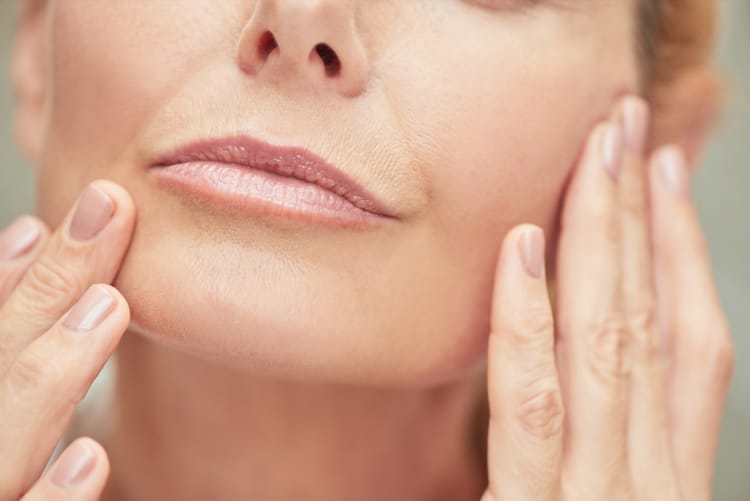
Is Your Pillow Aging You? The Surprising Link Between Sleep Position and Facial Symmetry

We spend about a third of our lives with our faces pressed against a surface. While we often obsess over the serums and creams we apply before bed, we rarely consider the mechanical force acting on our skin for those eight hours. If you’ve ever woken up with "sleep lines" that take an hour to disappear, you’ve seen the physical evidence of facial compression.
As someone who looks at faces through a structural lens, I can often tell which side a woman sleeps on just by looking at her. One eye might sit slightly lower, one nasolabial fold might be deeper, or one side of the jawline might appear softer. This isn't just "natural aging." It’s the result of 2,500 hours a year of pressing your delicate facial tissues into a pillow.
The Science of Sleep Crushing
When you sleep on your side or stomach, gravity pushes your face into the pillow. This creates a "shearing" force on the skin. Unlike expression wrinkles (which come from muscle movement), sleep wrinkles are caused by the skin being folded and held in place.
Over time, this repetitive folding breaks down the collagen and elastin fibers in that specific area. Because our skin's regenerative capacity slows down as we enter our mid thirties and forties, those temporary morning creases eventually become permanent features of our anatomy.

3 Habits to Protect Your Face Tonight
You don't need to completely change who you are as a sleeper overnight, but you can make these three actionable adjustments to mitigate the damage:
1. The "Ear Gap" Technique
If you are a committed side sleeper, try to position your head so that your face hangs slightly off the edge of the pillow. The goal is to have the weight of your head supported by your forehead and the area around your ear, leaving the delicate mid face and eye area "floating." This prevents the skin from bunching up toward your nose.

2. Transition to Back Sleeping
I know, it’s easier said than done. However, sleeping on your back is the ultimate "no cost" facelift. It allows gravity to work with you, pulling the skin back toward the ears rather than forward toward the chin. If you struggle with this, try placing a small pillow under your knees to take the pressure off your lower back, making it more comfortable to stay in one position.

3. Switch Your Surface
If you can’t stay on your back, the material you sleep on matters immensely. Cotton is "grabby." It creates friction and pulls on your skin. Silk or high quality satin allows the skin to slide. This reduced friction means fewer deep folds and less mechanical stress on your fascia.
Why Your Fascia Remembers
It is important to remember that our fascia is like a biological fabric. If you fold a piece of linen and leave it under a heavy book for eight hours, it will have a crease. Our faces are the same. When the fascia is compressed every night, it begins to "set" in that collapsed position.
To understand the long term structural impact of these mechanical forces, you can look at this study on the development of sleep wrinkles. It’s a sobering reminder that how we rest is just as important as how we move.
The Long Game of Symmetry
Natural aging is a beautiful process, but premature asymmetry from sleep habits is something we can actively manage. Tonight, as you settle in, take a moment to notice how your face feels against the pillow. Are you "crushing" your cheekbones, or are you supporting your structure?
Small, mindful shifts in how you rest can save you years of corrective work down the road. You’re not just sleeping; you’re setting the foundation for tomorrow’s glow.