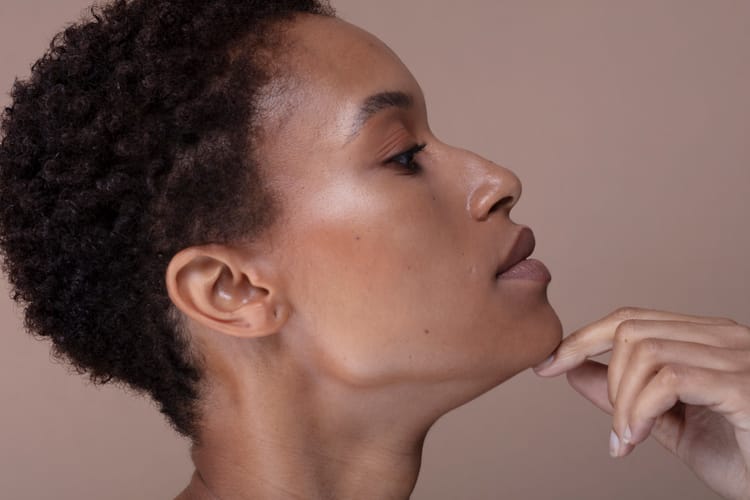
Cheekbone Scaffolding: Why Your Smile Lines Need a Lift, Not a Fill

The deepening of nasolabial folds-those lines running from the nose to the corners of the mouth-is often the first thing that makes women consider fillers. In the US, the standard approach is to "fill the crack." However, from a sculpting perspective, this is often the wrong strategy. Those lines are rarely the problem themselves; they are a symptom of the mid-face losing its structural support.
When your cheek muscles (the zygomatics) become weak or tense, they can no longer hold the weight of the malar fat pad in place. Gravity pulls everything down, and that tissue "bunches up" against the mouth, creating the fold. If you want to soften those smile lines, you don't need to fill them: you need to rebuild the scaffolding in your cheeks.
The "Balloon" Technique for Internal Smoothing
One of the most effective ways to address smile lines is from the inside out. This exercise stretches the fascia and releases the tension that holds the fold in place.
Take a breath and fill one cheek with air, as if you are holding a balloon in your mouth. Use your tongue to gently "massage" the nasolabial line from the inside. Move the air from one cheek to the other, then under the top lip, and finally under the bottom lip. Repeat this for one minute. This hydrates the tissue from within and prevents the "setting" of deep creases.

The Zygomatic Lift
This exercise targets the "lifting" muscles of the face.
- Open your mouth and wrap your lips over your teeth to form a long, narrow "O" shape.
- Place your index fingers horizontally on top of your cheekbones, just under your eyes.
- Try to "smile" using only your upper cheek muscles. You should feel the muscles pull upward against your fingers.
- Hold the contraction for three seconds, then release. Repeat ten times.
You are effectively "re-shortening" the muscles that have become elongated and weak, providing a natural lift to the entire lower face.
Why Muscle Tone Trumps Fillers
Fillers can add volume, but they add weight. Over years, that extra weight can actually accelerate the sagging of the mid-face. By building muscle tone, you are creating a natural, living "filler" that stays in place and improves the health of the overlying skin.
The relationship between our facial muscles and the aging process is a fascinating field of study. You can read more about the role of facial muscles in aesthetic appearance to see why maintaining "muscle bulk" in the cheeks is the key to a youthful silhouette.

Integration Into Your Day
The best thing about cheek sculpting is that you can do it while driving or working. Whenever you feel your face "dropping" into a tired expression, perform a few "O" stretches. It reminds your muscles to stay engaged and lifted.
Consistency is the secret here. You are training your face to hold itself differently. Over time, those folds will appear shallower, not because you’ve masked them, but because you’ve restored the support they were missing.