
Beyond the Surface: Why Fascia Release is the Missing Link in Your Anti-Aging Routine
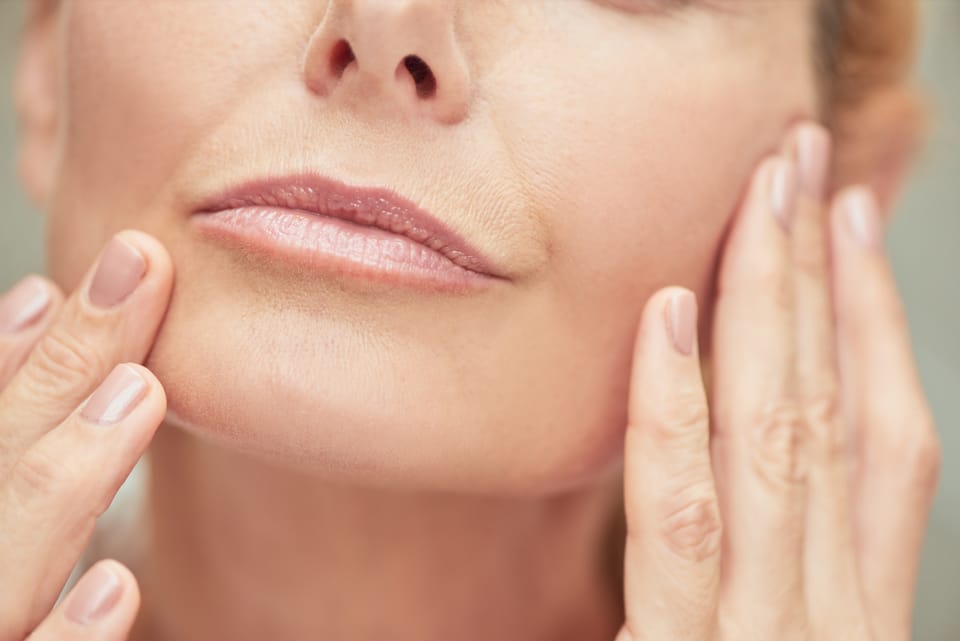
If you’ve been diligent with your face yoga and you’re drinking your green juices, but you still feel like your face looks "tired" or "stiff," you’re likely missing one crucial element. It isn’t your skin, and it isn’t just your muscles. It’s your fascia.
As a practitioner who has seen thousands of faces, I can tell you that fascia is the most overlooked secret in the natural beauty world. Think of fascia as a sophisticated, 3D internal "web" or a thin, cling-film-like layer that wraps around every muscle, bone, and nerve in your face. When this web is healthy, it is hydrated, elastic, and smooth. But when it gets "stuck," it creates the very lines and sagging we try so hard to avoid.
The "Sticky" Truth About Aging
Over time, due to repetitive expressions, stress, and even dehydration, our fascia can become dehydrated and "gluey." It literally sticks to the underlying muscle or bone. When fascia is stuck, it acts like a tight pair of jeans that are two sizes too small. No matter how much you "workout" the muscles underneath, the surface will always look bunched, wrinkled, or pulled down.
This is why some wrinkles-especially those deep 11 lines between the brows or the nasolabial folds-seem so stubborn. They aren't just in the skin. They are "creased" into the fascia itself.
How to Release the Tension
Fascia release isn't about the gliding strokes we use in lymphatic drainage. It requires a different "language" of touch. We use a technique called myofascial shearing or "pinching."
- The Brow Lift: Take your thumb and index finger and gently "pinch" the skin right at the start of your eyebrow near your nose. Instead of pulling it away from your face, try to gently "roll" the tissue between your fingers as you move toward the tail of the brow. If it feels tender or "crunchy," that is exactly where your fascia is stuck.
- The Jawline Release: Use your knuckles to press firmly (but not painfully) into the masseter muscle (the jaw muscle). Instead of sliding, make tiny, slow circular movements. Imagine you are trying to melt butter. You want the heat from your hands to soften the connective tissue underneath.
- The Scalp Shift: Most people forget that the fascia on our face is connected to the fascia on our scalp. If your scalp is tight, it pulls your forehead back and down. Spend one minute "moving" your scalp with your fingertips. It should move freely over your skull.

The Biological Connection
The beauty of fascia work is that it stimulates fibroblasts-the cells responsible for producing collagen and elastin. When you stretch and "shear" the fascia, you are sending a mechanical signal to these cells to start the repair process.
To understand how this interconnected web functions throughout your entire body, I highly recommend looking into this comprehensive overview of the fascial system. It explains why a tight neck can lead to a saggy mid-face and why a holistic approach is the only way to get lasting results.
Why This Replaces Injections for Me
Many of my clients consider fillers because they feel they have "lost volume." Often, what they have actually lost is fluidity and space within the fascial layers. When we release the fascia, we allow blood and lymph to flow back into those "stuck" areas. The face naturally looks plumper, more hydrated, and significantly more "alive" without ever needing a needle.

Your Homework for Tonight
Tonight, when you are washing your face, don't just go through the motions. Take an extra minute to feel where the skin feels "glued" to the bone. Focus on those areas with slow, melting pressure.
Fascia release is about patience. You can't force a web to unstick; you have to coax it. But once you do, you’ll see a level of lift and glow that no topical product can ever replicate.